 Contact: +86 189 4818 7408
中文
 Contact: +86 189 4818 7408
中文


During Black Friday, cross-border sellers typically focus on order volume and total sales. However, for product categories with high return rates—such as apparel, footwear, and headwear—the actual profit from an order cannot be determined the moment the item is shipped.
Some Black Friday orders may be returned as late as December or even January of the following year. At that point, sellers face not only return shipping costs but also expenses related to receiving, inspecting, sorting, and processing the returned items. Furthermore, it is easy to overlook the fact that the value of a product may decline while it is in transit or awaiting processing.
For instance, if a seasonal item sold during Black Friday is returned and subsequently undergoes a lengthy cross-border transit and processing period, it may well arrive back at a time when the market has shifted deeper into end-of-season clearance discounts.
Therefore, the true cost of a return is not merely the expense of shipping the item back; it also encompasses the loss in the product's value throughout that process.
The same returned item can yield vastly different financial outcomes depending on where it is processed.
A model recently published by *Transport Monthly*—the "ShopReturns" model—offers a useful framework for sellers to consider. It should be noted that this is a hypothetical model, not based on actual industry-wide averages. Because product prices, shipping distances, processing costs, and the condition of returned goods vary, individual sellers may see significantly different results.
Nevertheless, the comparisons within the model are quite revealing. According to its projections, a single returned item processed locally could yield a net recovery of €7.22. In contrast, returning the item across borders to a central warehouse could result in a net recovery of -€1.21 (a loss), while liquidating the item locally could yield €1.30.
The point of this data is not to suggest that "local processing is always more cost-effective than returning items to a central warehouse."
Rather, the key takeaway for sellers is that different processing paths entail entirely different total costs. Cross-border transit adds logistics expenses and extends wait times, while immediate liquidation—though an efficient way to clear out inventory—may fail to capture the full remaining sales value of the product. Therefore, when an item is returned, a seller shouldn’t simply ask, “What is the cheapest way to ship this back?” Instead, they should ask, “Which disposition method will yield the highest recovered value for this item?”
The key after a return arrives is not immediate action, but rather an assessment of the item’s remaining value.
Using a pair of boots as an example, the ShopReturns model provides a hypothetical breakdown: refurbishment yields a net recovery of €27.26, direct resale yields €21.75, and liquidation yields only €5.70.
While these figures are merely illustrative—and certainly won’t apply to every footwear product—they highlight a practical reality: the options for returned goods are not limited to just “resell” or “liquidate.”
Items in good condition may still be suitable for resale. Those with minor issues—such as slight creasing or damaged packaging—can be refurbished or repackaged. For items showing clear signs of use or damage, sellers must evaluate whether further investment in processing is even worthwhile.
What sellers truly need is a straightforward decision-making framework: How much can this item still be sold for? And how much additional investment is required to restore it to a sellable state?
If processing costs continue to mount while the item’s market value declines over time, waiting longer could result in even greater losses than taking immediate action.
In the context of Black Friday returns, one of the greatest costs is, in fact, “waiting.”
For sellers on the UK marketplace, Black Friday returns do not all arrive immediately after the event concludes in late November. Some returns trickle in throughout December, while returns from the Christmas shopping season and seasonal merchandise may continue into January. This means sellers are effectively in a race against time.
The sooner a returned item is inspected, the sooner a seller can determine the optimal path forward. Items in good condition can be quickly routed for resale; those requiring minor touch-ups can be processed promptly; and items no longer worth the investment can be identified early, allowing for alternative decisions to be made without further delay. For items with high seasonality—such as apparel, footwear, and headwear—time itself is a key component of an item’s residual value. If goods remain in transit or sit uninspected for long periods after being returned, sellers effectively miss out on optimal windows for processing or reselling them.
Black Friday profits can only be accurately calculated once returns have been processed.
Sellers who typically consolidate UK returns and ship them back to their home country may want to reconsider their approach ahead of the peak season: is it truly necessary for every returned item to undergo cross-border transit?
Different products—varying in value and condition—may require different handling strategies. Crucially, once an item is returned, it should undergo local inspection as soon as possible. Assessing its actual condition is the essential first step in determining how to proceed.
U-Speed’s UK returns warehouse offers local receiving services, as well as quality inspection, steaming, tidying, and folding for apparel, footwear, and headwear. Based on the inspection results, sellers can then decide on the best course of action for each eligible item.
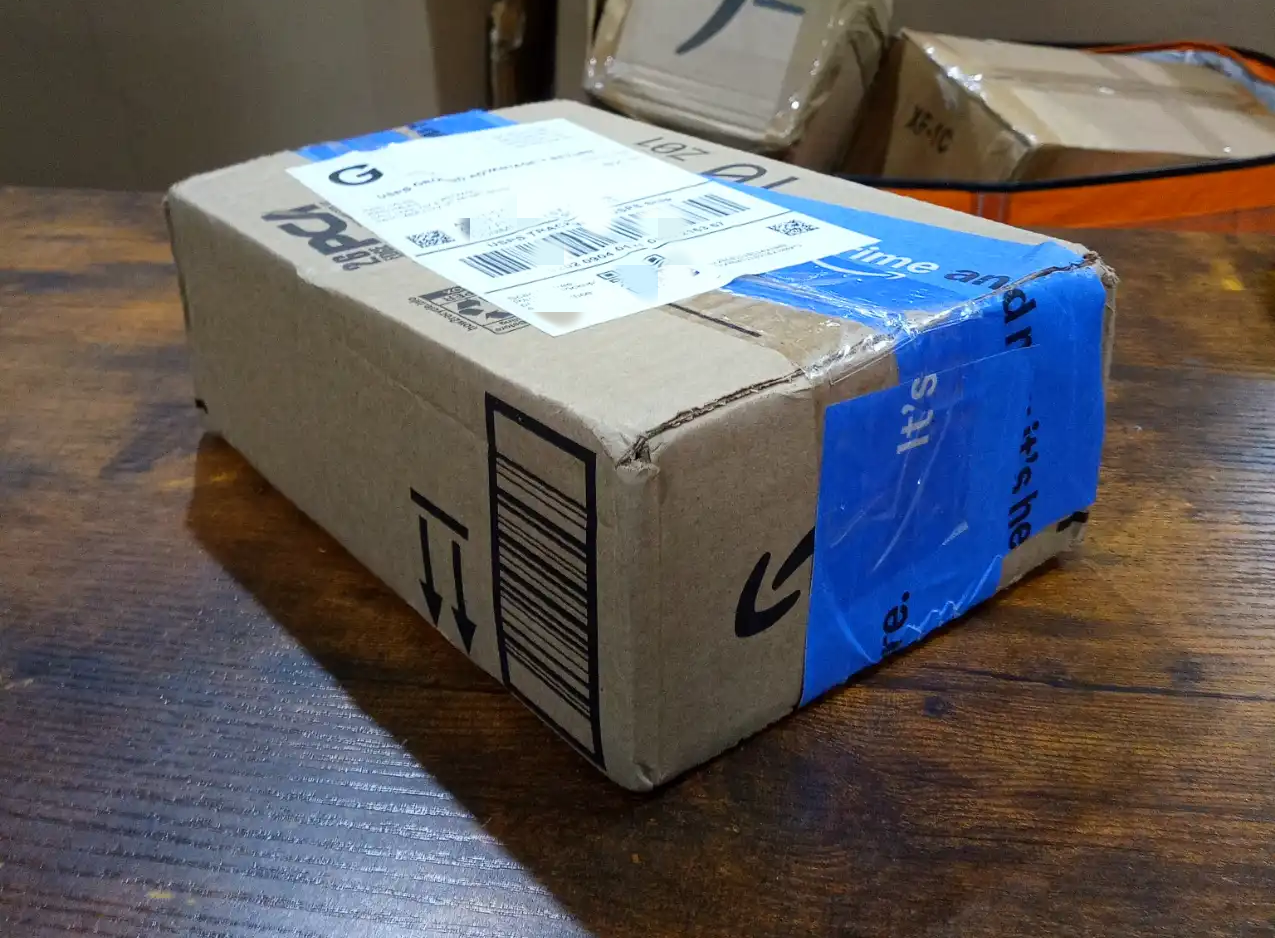
Admittedly, not all returns are suitable for resale, and local processing may not be the right solution for every product. However, for cross-border sellers, knowing the residual value of a returned item as early as possible is a prerequisite for making informed, effective decisions.
While Black Friday sales figures can be tracked during the event itself, the final profit on an order can only be determined once returns have been fully processed. The residual value of a returned item is not a static figure; it depends heavily on where the item is processed and how quickly the seller can decide on the next steps.