

For cross-border apparel sellers, handling returns is an almost daily occurrence.
This is especially true for basic items like women's racerback tanks and camisoles; consumers often order multiple colors or sizes at once, keeping only what fits and returning the rest. Most of these returns do not stem from quality issues but rather from fit or color discrepancies discovered after trying the items on, or simply a change of mind.
However, the real challenge for sellers isn't the return itself, but what to do with the merchandise once it comes back. If items aren't promptly inspected, processed, and restocked, goods that could have been sold may lose their value due to sitting idle for too long.
Recently, a cross-border seller specializing in women's racerback tanks—a client of U-Speed—successfully reintegrated approximately 95% of their returned items into their sales system by utilizing a comprehensive US-based returns processing solution.
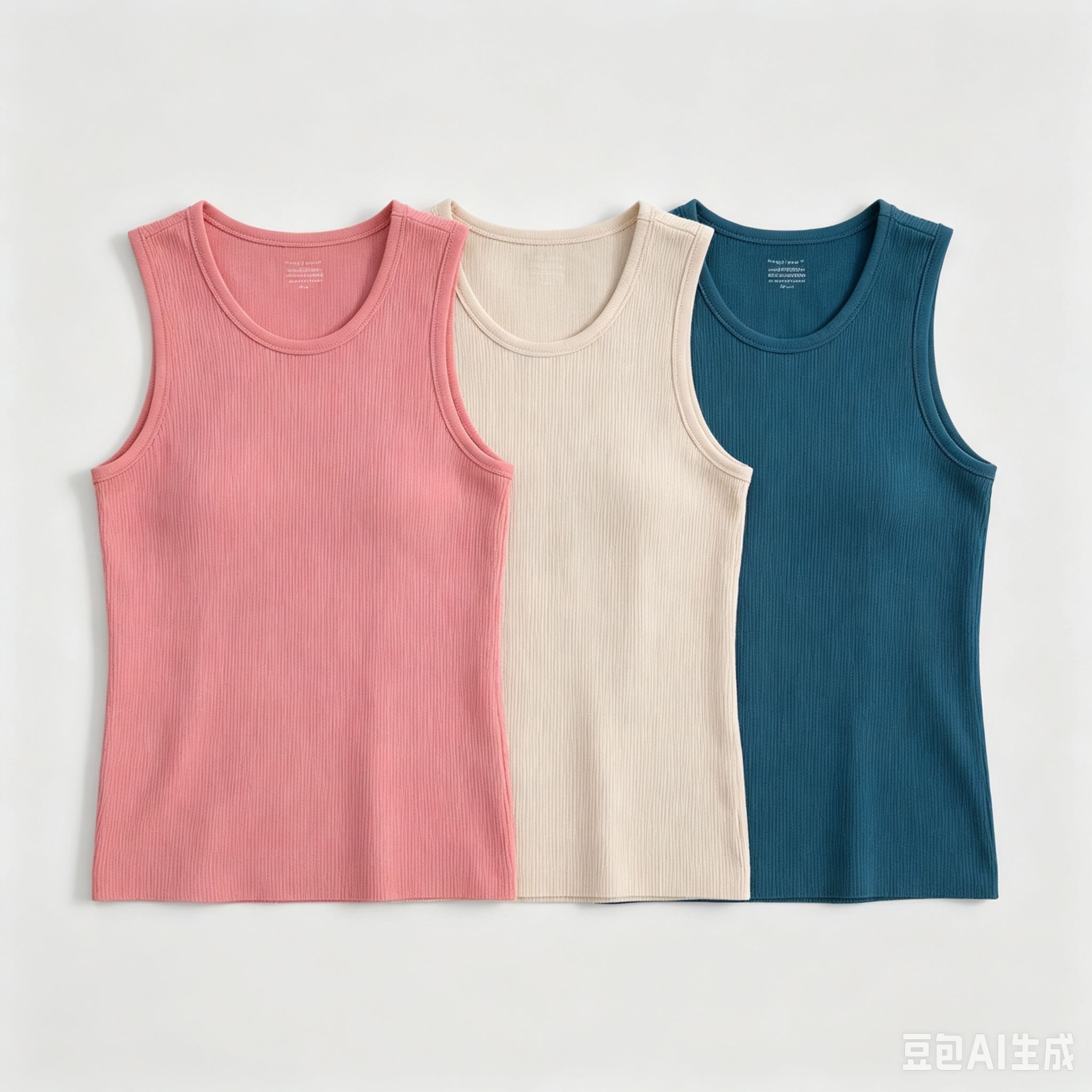
Rising Return Volumes: The Challenge Goes Beyond Just "Receiving Goods"
This client sells women's racerback tanks primarily to the US market across multiple channels, including SHEIN, TikTok Shop, Shopify, and their own independent website. As their business has expanded, the volume of return orders has grown alongside it.
After operating for some time, the client realized that the real difficulty wasn't the increasing number of returns, but the management challenges inherent in every step of the post-return process.
First, return packages were arriving from various platforms at different locations; the lack of a unified US return address resulted in inefficient receiving processes. Although the goods had physically arrived in the US, inventory records could not be updated in real-time. Many items remained in a "returned but not restocked" limbo for extended periods, hindering future sales.
Second, because the seller is based overseas, they could not accurately assess the condition of individual returned items. Determining whether an item had stains, was suitable for resale, retained its tags and packaging, and matched the SKU required on-site, item-by-item inspection. Without a professional quality control process, many items that could have been sold were sidelined, resulting in unnecessary inventory waste.
Meanwhile, the client’s multi-platform operations demanded real-time inventory synchronization. If returned goods were not promptly restocked, the company faced a scenario where they needed to replenish stock while simultaneously holding a large backlog of returns. This not only hampered inventory turnover but also increased the complexity of operational management. Previously, the client relied on different service providers for return processing and order fulfillment. Once returns were processed, they had to be transshipped to an overseas warehouse before they could be sold again; this cumbersome workflow drove up costs related to storage, stock transfers, and logistics.
The client was not merely looking for a return warehouse, but for a partner capable of integrating return receipt, quality inspection, inventory management, and subsequent fulfillment into a seamless process.
Instead of scrapping the existing workflow, we added the missing critical link in the US.
After the client engaged U-Speed, we first analyzed the entire return process. We discovered that the issue lay not in the volume of returns, but in the lack of an integrated post-return processing chain. Consequently, U-Speed developed a comprehensive solution for the client covering US-based return processing and resale.
Returned items from consumers are consolidated and shipped to U-Speed’s US return warehouse. Upon receipt, packages are scanned, registered, and entered into the system within 24 hours, ensuring immediate visibility and management for every returned item.
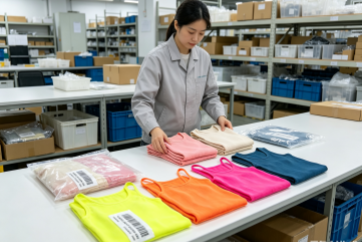
Following intake, staff conduct detailed inspections tailored to the specific characteristics of apparel products:
Signs of wear
Fabric stains or damage
Snags or pilling
Integrity of hangtags
Condition of packaging bags
Accuracy of color and size
SKU verification
The quality inspection process is typically completed within 48 hours. Staff categorize the items and provide the client with photos and status updates. This allows the client—even while based domestically—to quickly assess the actual condition of each item and decide on the next steps.
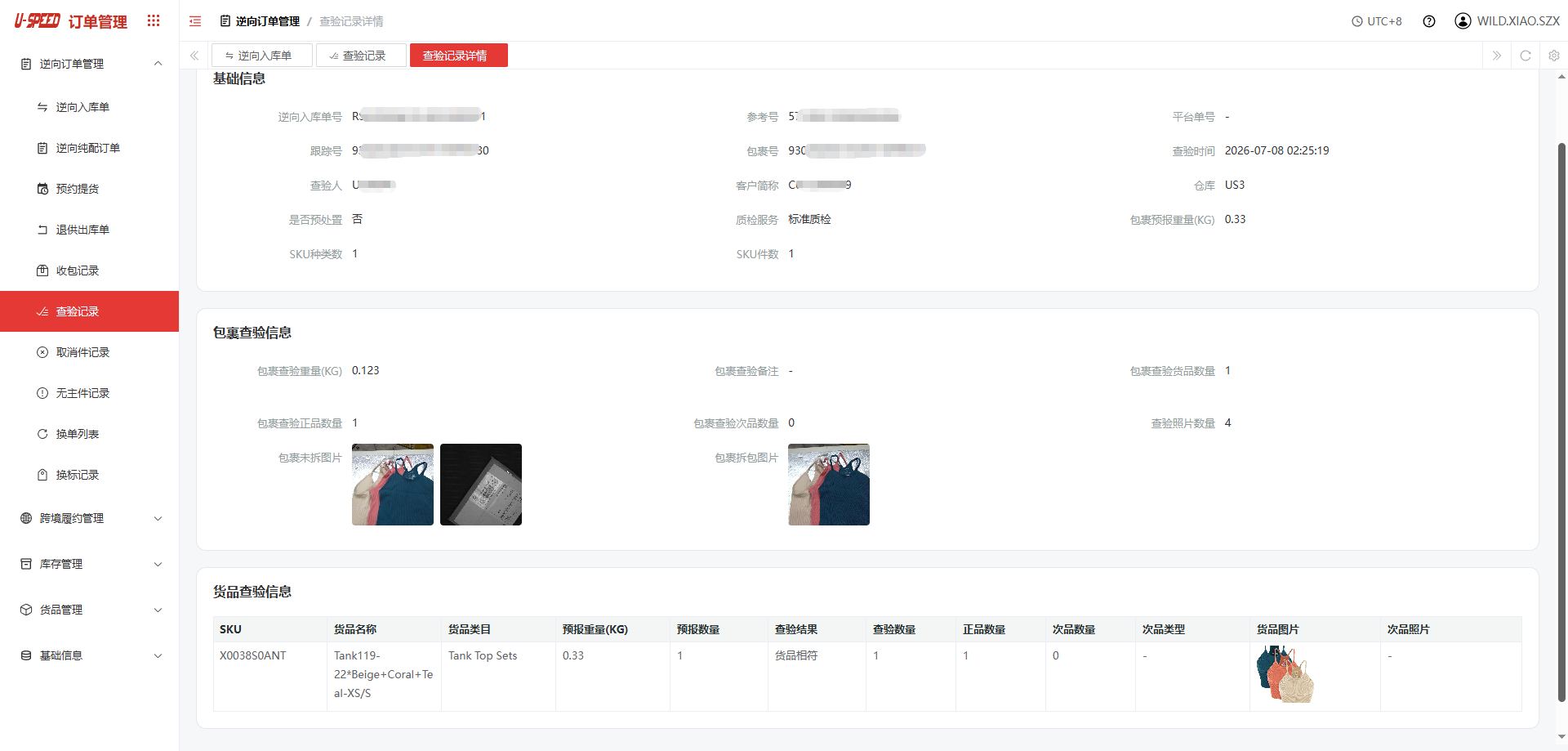
This approach not only improves decision-making efficiency but also prevents misjudgments caused by a lack of information, thereby salvaging more inventory that is suitable for resale.
No more multiple transfers between return and fulfillment stages.
After inspection, items meeting sales criteria are refurbished according to the client’s specifications—including light cleaning, repackaging, refolding, label adjustment, and SKU sorting—before being returned to active inventory.
Unlike the previous method, which required moving stock back and forth between the return warehouse and the fulfillment warehouse, the refurbished items now go directly into U-Speed’s US overseas warehouse. When new orders are generated via SHEIN, TikTok Shop, Shopify, or independent online stores, the warehouse can immediately handle picking, packing, label printing, and local shipping.
In other words, the entire cycle—from consumer return and restocking to the generation and fulfillment of a new order—takes place domestically within the U.S. There is no need for transshipment to other locations, thereby reducing the time and costs associated with moving goods repeatedly between warehouses.
For the client, return processing and order fulfillment have truly formed a complete, closed-loop system.
95% of returned items regained their value
After a period of collaboration, the client’s most significant takeaway was not necessarily a reduction in the volume of returns, but rather the ability to repurpose them. Previously, many returned items sat idle in the warehouse for long periods because no one was inspecting or organizing them; now, the vast majority undergo quality inspection and processing within a short timeframe, returning to inventory to fulfill subsequent orders.
Client feedback indicates that approximately 95% of a specific batch of returned women's racerback tank tops were restored to a sellable condition and re-entered the sales system. At the same time, there were marked improvements in return intake efficiency, inventory turnover, and multi-platform inventory management.
For apparel sellers, return management is a key component of competitiveness
Many cross-border sellers focus heavily on front-end customer acquisition and order growth while overlooking the importance of return management. In reality, for product categories with relatively high return rates—such as apparel—the efficiency of return processing directly impacts inventory utilization and operating costs.
U-Speed’s U.S. return warehouse currently offers cross-border sellers a suite of services including return intake, quality inspection, photo-based reporting, processing for re-listing, overseas warehousing, and dropshipping. These services help sellers establish an integrated system for returns and fulfillment, allowing more returned items to re-enter the sales cycle.
For cross-border e-commerce, returns are inevitable, but they do not necessarily equate to a loss. A robust overseas return processing system can reactivate stagnant warehouse inventory, ensuring that every item with remaining sales potential continues to generate new orders and value.
(Note: To protect the confidentiality of the client's products, some illustrative images in this article were generated by Doubao AI.)

